

drfarhatanwer0786@yahoo.com
Symptoms of Sinusitis: The area of your sinus pain depends on which sinus is affected. Head Ache when you wake up in the morning is typical of a sinus problem. Pain when your head over the frontal sinuses is touched may indicate that your Frontal sinuses are inflamed. Heaviness in the head while bending the head.
Infection in the Maxillary sinuses can cause your upper jaw and teeth to ache and your cheeks t o become tender to the touch. Since the Ethmoid sinuses are near the tear ducts in the corner of the eyes, inflammation of these cavities often causes swelling of the eyelids and tissues around your eyes, and pain between your eyes. Ethmoid inflammation also can cause tenderness when the sides of your nose are touched, a loss of smell , and a stuffy nose. Although the Sphenoid Sinuses are less frequently affected, infection in this area ear aches, neck ache and deep aching at the top of your head. Most of the people with sinusitis however, have pain or tenderness in several locations, and their symptoms usually do not clearly indicate which sinuses are inflamed.
A few more symptoms of sinusitis are as follows:
A cough that may be more severe at night
Nasal congestion
Tiredness
Fever
Weakness
Acute sinusitis starts with a common cold, which is caused by a virus. Such viral colds do not cause symptoms of sinusitis, but they do inflame the sinuses. Both the cold and the sinus inflammation usually go away with in 2 weeks. The inflammation however, might explain why having a cold increases your likelihood of developing acute sinusitis. For example, your nose reacts to an invasion by viruses that cause infections such as the common cold or flu by producing mucus and sending white blood cells to the lining of the nose, which congest and swell the nasal passages. When this swelling involves the adjacent mucous membranes of your sinuses, air and mucus are trapped behind the narrowed openings of the sinuses. When your sinus openings become too narrow, mucus cannot drain properly. This increases in mucus sets up prime conditions for bacteria to multiply.
Bronchitis: It can be defined as an inflammation of the air passages with in the Lungs. It occurs when the trachea (windpipe) and the large and small air ways within the lungs become inflamed because of infection or other causes.
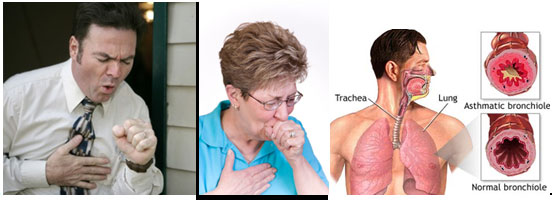
1. The thin mucous lining of these airways can become irritated and swollen.
2. The cells that make this lining may leak fluids in response to the inflammation.
3. Coughing is a reflex that works to clear secretions from the lungs. Often the discomfort of a severe cough leads you to seek medical treatment.
4. Infants usually get bronchitis, which involves the smaller airways and causes symptoms similar to asthma.


